
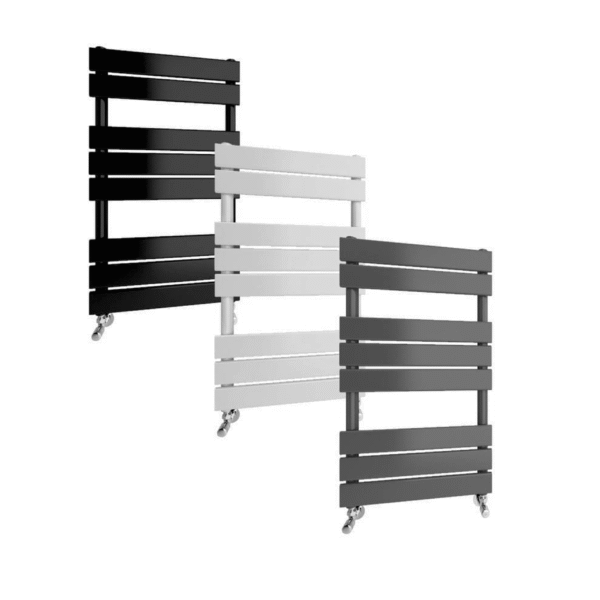
A towel radiator, also known as a towel warmer, is a heating device designed to dry and warm towels. It also helps to heat the bathroom, adding comfort and preventing dampness.
Towel radiators can be powered by hot water from a central heating system (hydronic), electricity (electric towel radiators), or a combination of both (dual fuel). They warm up the metal bars or panels, which then heat the towels and the surrounding area.
All of the towel radiators that we currently stock are hydronic.
Benefits include having warm, dry towels ready for use, reducing moisture and dampness in the bathroom, adding extra heating to the room, and providing a stylish design element.
Yes, towel radiators can provide sufficient heat to warm a bathroom, especially in smaller spaces. However, their primary function is to warm towels, so larger bathrooms may require additional heating sources.
Towel radiators are commonly made from materials such as stainless steel, mild steel, aluminum, and sometimes brass. These materials are chosen for their durability, heat conductivity, and aesthetic appeal.
Yes, towel radiators are generally energy-efficient. Electric models can be used independently of the central heating system, allowing for flexible use and energy savings.
Yes, towel radiators can be installed in kitchens, laundry rooms, or any other area where warm, dry towels or clothes are desired.
Maintenance involves regular cleaning to remove dust and debris from the bars or panels. For hydronic models, periodic checks for leaks and ensuring the radiator is properly bled are important. Electric models may require occasional inspections of the electrical connections.
The main types include:
Installation difficulty can vary. Electric towel radiators are generally easier to install and can often be done as a DIY project. Hydronic and dual fuel models may require professional installation to connect to the central heating system and ensure proper functioning.